
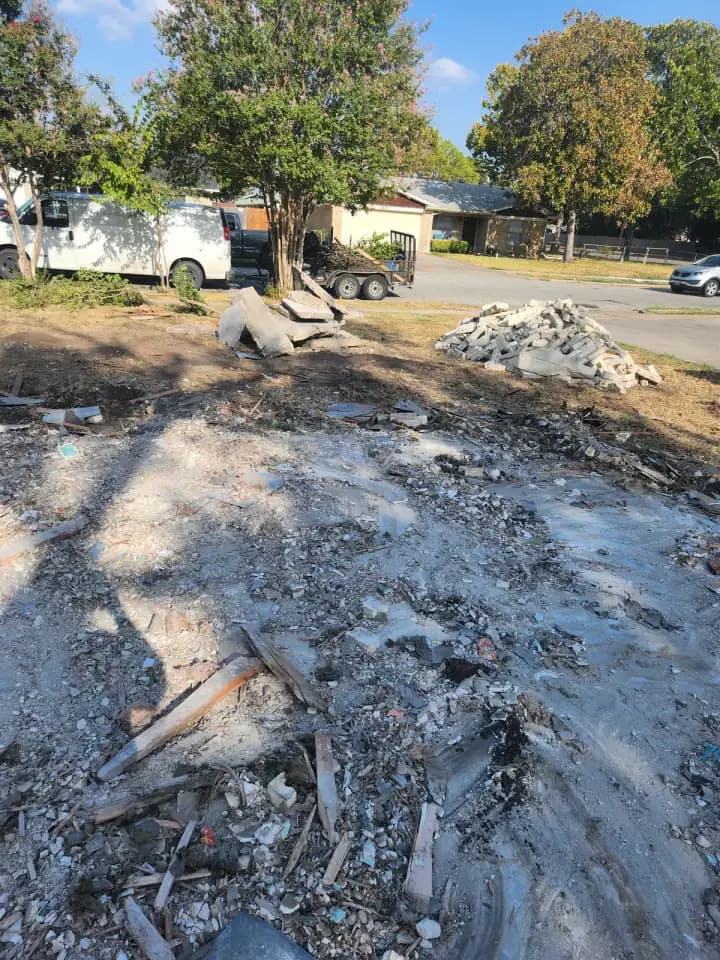
The short answer: the cost to demo a house depends on the structure, access, foundation, debris, hazardous materials, permits, and the condition you want the lot left in. A national consumer benchmark puts full home demolition at roughly $4 to $17 per square foot, but that is a planning range, not a quote for a North Texas property. A real price comes after someone sees the home and the site.
For a Rockwall-area project, the most useful first questions are simple: What exactly is being removed? What must stay? And what should the lot look like when the crew leaves? The answers change the equipment, number of loads, disposal plan, schedule, and final price. This guide breaks down the moving parts so you can compare bids without comparing two different scopes by accident.
A quick cost picture before you call
The phrase “house demolition” can describe several different jobs. A complete teardown may include the house, attached garage, slab, foundation, driveway, trees, brush, and final rough grading. Another quote may cover only the above-ground structure and hauling, while leaving the slab and utilities for someone else. Both can be honest quotes when the scopes are clear. They are not the same project.
For broad planning only, Angi’s current national cost guide reports a residential demolition range of about $4 to $17 per square foot. A 1,500-square-foot home would land in a very wide theoretical band before local conditions and special work are sorted out. Use that range to understand why size matters, not to set a contractor’s price. Local disposal, travel, access, structure type, and what happens below grade can move the number quickly.
2 Sons Grnd Wrx serves Rockwall and surrounding North Texas communities as an owner-involved groundwork contractor. Kevin Scott brings more than 12 years of heavy-equipment experience to the work. The company’s approved demolition scope includes residential and commercial work, but the right fit still depends on the property, access, timing, and the exact removal plan.
What drives the cost to demo a house?
1. The size and type of structure
Square footage is a starting point because a larger house usually means more material, more machine time, and more hauling. It does not tell the whole story. A one-story wood-frame house with open access is a different job from a two-story masonry house beside a fence, road, or neighboring building.
Construction type changes the way a crew takes the structure down. Wood framing, brick, block, concrete, metal, roofing, insulation, cabinetry, and interior finishes create different loads and handling needs. Attached garages, porches, pools, sheds, retaining walls, and additions can also turn a “house” into several removal scopes.
2. Access for equipment and trucks
A demolition machine needs room to enter, work, turn, and load. Trucks need a safe route in and out. Narrow gates, steep drives, soft ground, overhead lines, fences, trees, occupied neighboring homes, and limited staging space can all slow the work or require a different sequence.
Access is one reason an online price calculator is weak for a real property. Two homes with the same floor plan can need different plans if one sits on a wide rural lot and the other is tight against a street and neighboring structures. Photos help, but an on-site look is what shows the constraints that affect production.
3. What is included below and around the house
Ask whether the proposal includes the slab, footings, basement, crawl-space contents, driveway, walkways, patios, steps, landscaping, trees, brush, fencing, and detached structures. If the new plan needs a clean building pad, ask whether rough grading, fill dirt, drainage work, or soil stabilization is included or priced separately.
“Down to dirt” is not one universal phrase. One contractor may mean the building is gone and the slab remains. Another may remove the slab and leave the site roughly level. A third may include export of excess material and a more finished grade. The written scope should say what remains, what leaves, and how the ground will be left.
4. Debris hauling and disposal
Demolition creates a large mix of material. Concrete, brick, roofing, drywall, wood, metal, insulation, appliances, and household contents may not go to the same place or carry the same disposal cost. The number of loads depends on the structure and how material is handled on site.
A bid should explain whether hauling and disposal are included, whether disposal fees are allowances or fixed amounts, and whether salvage or recycling changes the plan. If the property contains leftover furniture, tires, trash, or other contents, ask whether those items are part of the demolition scope. Do not assume “everything” means the same thing to every bidder.
Permits, utilities, and hazardous materials
Rockwall permits are part of the plan
The City of Rockwall states that demolitions require building permits. Its current fee schedule lists a $100 demolition-of-structures permit fee, but the authority, application, inspection steps, and fees can differ outside the city limits. A property in Rockwall County may follow county requirements or another city’s rules, so confirm the jurisdiction before work is scheduled.
Start with the City of Rockwall Building Inspections page for the city’s permit portal and department contact information. The city’s published permit-fee schedule is a useful reference for the listed demolition fee, but it is not a complete project budget and it should not replace a current confirmation with the permitting office.
Utility disconnects come before the machine
Electric, gas, water, sewer, telecommunications, and other services must be addressed before demolition. The property owner, utility provider, and contractor may each have a role, and the steps vary by service and jurisdiction. A structure should not be treated as ready just because the power switch is off.
Ask who is responsible for each disconnect, what written confirmation is needed, and how long the request can take. If a service line crosses a neighboring property or the site has a private septic system or well, mention it early. A missed utility step can stop the job, create a safety risk, or add a return trip.
Asbestos and other regulated materials
Older buildings can contain asbestos in materials such as insulation, floor tile, pipe wrap, roofing, siding, or other components. You cannot identify it safely by sight alone. The U.S. Environmental Protection Agency provides guidance on asbestos hazards, demolition and renovation requirements, and finding qualified professionals.
If asbestos or another regulated material is suspected, ask for the correct survey and abatement path before the structure is disturbed. Do not include an assumed “asbestos allowance” in a bid unless the scope says what was tested, what was found, and who is responsible for removal. The same rule applies to lead-based paint, fuel tanks, chemicals, and unknown contents. The EPA asbestos resource is a good starting point for the federal guidance.
Call 811 before digging
Demolition often leads to excavation, slab removal, foundation removal, utility trenching, or grading. Texas811 says excavators must contact 811 at least two business days before excavating, excluding weekends and holidays. The process includes requesting the locate, waiting for responses, confirming marks, protecting them, and digging with care.
Make the request through Texas811 before ground is broken. A utility locate marks member-owned lines, but private lines can require a separate private locator. Keep the ticket information and markings available for the crew, and ask what must happen if marks are missing, damaged, or no longer current.
How long does a house demolition take?
The machine work may take only a few days, but the calendar starts before the first bucket touches the building. Permit review, utility releases, asbestos or other material surveys, site preparation, weather, disposal scheduling, and traffic or neighborhood restrictions can all affect the start date.
A simple, accessible structure with clear approvals may move faster than a complicated site. A masonry building, tight urban lot, multi-structure property, or site with hazardous materials needs more coordination. Ask for a target start window and an estimated work duration, then ask what could move either one.
A practical sequence
- Site review and scope: identify the structure, access, adjacent risks, contents, utilities, and the desired final grade.
- Approvals and planning: confirm the jurisdiction, demolition permit, utility releases, surveys, haul routes, and disposal plan.
- Preparation: establish the work area, protect what stays, stage equipment, and confirm that required locates and releases are current.
- Demolition and loading: take the structure down in a controlled sequence, separate or load material, and keep the site safe.
- Cleanup and closeout: remove agreed debris, address the slab or foundation scope, rough-grade the area if included, and document exclusions or changed conditions.
A schedule should also account for weather. Heavy rain can make access unsafe or soften North Texas soils. Summer heat can affect the pace of outdoor work. The right question is not only “How many days?” but “What has to happen before those days can begin?”
What a useful demolition quote should show
A demolition price is usually a bundle of several cost buckets rather than one machine charge. Labor covers the crew that prepares the site, controls the work area, takes the structure down, sorts or loads material, and cleans up. Equipment covers the machine, attachments, delivery, fuel, and time on site. Hauling covers trucks, drivers, load limits, travel, and disposal or recycling fees. A quote becomes clearer when those buckets are tied to the listed scope.
Mobilization and equipment
Getting a heavy machine to a property takes planning. The contractor may need a lowboy or other transport, a route that can handle the load, a staging area, and enough room to work without damaging the portion of the property that remains. Some sites need a smaller machine first, temporary protection, or extra cleanup before the main equipment can safely enter.
Attachments also matter. A bucket, grapple, shear, breaker, magnet, or other tool changes what the machine can do and how material is handled. The right attachment depends on the structure and the disposal plan. It is not useful to compare two equipment lists unless the two contractors are solving the same removal problem.
Labor, sequencing, and supervision
A controlled teardown is more than pushing a building over. The crew has to identify hazards, protect what stays, work around utilities and neighboring improvements, manage the collapse sequence, keep people out of the work zone, and load material in a way that keeps the site moving. A complicated property can need more hands or more machine time even when the building is small.
A contractor may also schedule separate phases for contents, structure, slab, and final cleanup. That sequence can look slower on paper but reduce damage and make disposal easier. Ask whether the proposal assumes one continuous mobilization or multiple visits. A return trip caused by a missed scope item can cost more than clear planning at the start.
Disposal is a project cost, not a footnote
Disposal costs depend on the material, weight, volume, destination, and local acceptance rules. Clean concrete may follow a different path from mixed demolition debris. Metal may be separated. Roofing, drywall, insulation, appliances, treated wood, and household contents may have different handling requirements. If a quote includes an allowance, ask what happens when actual loads or fees differ from that allowance.
The property owner should also ask whether salvage is planned. Reusable doors, fixtures, brick, or metal can affect the order of work and the amount of debris, but salvage is not automatic and it can add labor. A written proposal should say whether the contractor has permission to remove or retain any materials and who owns them once they are separated.
Below-grade work can change the number
Removing a house does not always mean removing everything under it. Slabs, footings, crawl spaces, basements, piers, buried debris, and old foundation walls can require different equipment and more excavation. If the next use of the property requires a new foundation, the builder or engineer may have specific requirements for what must be removed and how the exposed area should be prepared.
Ask whether the price is for above-ground demolition only or includes below-grade removal. If the foundation is staying, ask how it will be left and whether the opening is safe and protected. If it is coming out, ask how the void will be handled and whether import fill, compaction, drainage, or grading belongs in the same contract or a later phase.
North Texas conditions that can affect the plan
Rockwall-area demolition is local work even when the search phrase is national. A property may be inside the City of Rockwall, in another nearby municipality, or in unincorporated county land. The permit office, inspection process, utility contacts, traffic rules, and disposal route can change with the address. Give the contractor the exact location early instead of assuming a Rockwall-area price covers every jurisdiction the same way.
North Texas weather can affect access as well as comfort. Heavy rain can soften a driveway or yard and make a heavy load unsafe. A dry stretch may leave dust that needs control near neighbors or a roadway. Summer heat can affect the crew’s pace and the timing of outdoor work. A realistic schedule includes the condition of the site, not just the square footage of the building.
Soil and drainage also matter after the structure is gone. A low area, steep grade, soft shoulder, or existing drainage path can affect where machines travel and where trucks stage. If the lot is being prepared for a future home, shop, driveway, or other improvement, share that goal before the quote is finalized. The preferred finish may be different from a simple debris cleanup.
Rural properties may offer more room but still have long haul routes, private wells, septic systems, buried lines, fences, gates, and soft shoulders. Town lots may have shorter disposal travel but tighter access, sidewalk protection, traffic exposure, and neighbors close to the work zone. Neither setting is automatically cheaper. The site plan is what matters.
If the property has been vacant, ask about animals, pests, standing water, stored fuel, old equipment, illegal dumping, and unsecured rooms. If the structure was damaged by fire, flood, or a storm, disclose that too. The condition can affect what a crew can safely remove, what must be tested, and what personal items need to be recovered before machinery arrives.
What to do before requesting a quote
A little preparation makes the first site conversation more useful. You do not need a final construction plan to ask for demolition pricing, but you should know the decision you are trying to make. Are you clearing a failed structure, preparing for a rebuild, opening a lot, removing an unsafe outbuilding, or taking out only an interior area? The answer shapes the scope.
- Confirm the property jurisdiction and collect the owner or project contact information.
- Take photos from the road, each side of the structure, the driveway, the rear yard, and any nearby buildings or lines.
- Note the approximate square footage, number of stories, construction type, additions, slab or basement, and detached structures.
- List anything that must remain, such as trees, fences, wells, septic components, utilities, driveways, or neighboring improvements.
- Tell the contractor about known contents, fire or storm damage, suspected asbestos, fuel tanks, buried debris, or access limits.
- Describe the desired final condition: debris removed, slab out, rough grade, fill, future build pad, or another specific handoff.
You can also ask the local building department what the permit application requires before the contractor arrives. That does not transfer responsibility from the contractor or owner, but it helps surface missing documents early. If demolition will lead to excavation, make Texas811 part of the schedule instead of adding it after equipment is booked.
How to handle changes after work starts
Hidden conditions are possible in demolition. A buried tank, extra foundation, unlisted structure, unsafe material, blocked access, or larger volume of contents can change the work. That does not mean every change is a surprise charge. It means the contract should describe how the contractor will document the condition, price the added work, and get approval before proceeding when it is safe to pause.
Ask for a written change order or written authorization that names the new condition, added work, added price, and schedule effect. If immediate action is needed for safety, ask the contractor to document the reason and the minimum work needed. Clear records protect both sides and make the final invoice easier to understand.
The same rule applies when the owner changes the scope. Adding a driveway, taking out a tree, removing a slab, hauling extra contents, or changing the final grade may require more equipment or disposal. Get the revised scope before the crew performs the extra work. A quick conversation in the field should still become a written record.
The final walk-through
Before the job is closed, walk the site with the contractor if possible. Compare the result with the written finish condition. Look for agreed debris removal, the slab or foundation treatment, access areas, rough grade, exposed hazards, remaining utilities, and any items that were intentionally excluded. If the property will go to a builder, share the handoff notes and photos with that next professional.
Look for these scope details
- Structure: house, garage, additions, sheds, pool, deck, fence, driveway, slab, foundation, and contents.
- Site conditions: access, staging, neighboring structures, overhead lines, trees, slopes, soft ground, and traffic constraints.
- Approvals: permit responsibility, utility disconnect responsibility, survey or abatement responsibility, and required inspections.
- Disposal: material handling, hauling, landfill or recycling assumptions, load limits, and any allowance that can change.
- Finish condition: slab left or removed, footing treatment, debris cleanup, rough grading, fill, drainage, and seed or stabilization.
- Change conditions: what happens if hidden foundations, buried tanks, contaminated material, or unlisted contents appear.
If a bid leaves one of these areas blank, ask before signing. A clear exclusion is better than a low number that becomes a change order after the work begins. Photos, a site walk, and a written list of what stays can prevent many of the hardest disagreements.
Questions to ask each contractor
- Does your price cover the permit, hauling, disposal, and cleanup, or are any of those separate?
- Are the slab, footings, driveway, trees, brush, garage, and contents included?
- Who handles utility releases, private utility locates, asbestos questions, and required inspections?
- What final site condition will I receive, and is rough grading included?
- What site conditions would change the price, and how would you approve that change?
- What start window and work duration are realistic after approvals are complete?
How to compare two demolition bids
Put both proposals into the same categories. Compare the structure list, below-grade work, disposal, permits, utility coordination, hazardous-material assumptions, site finish, schedule, and change-order language. Then compare the contractor’s plan for access and safety. A bid that costs more may include work the cheaper bid leaves out, while a cheaper bid may be the better fit if both scopes truly match.
Do not choose from a screenshot of a number alone. Ask the contractor to walk through the proposal in plain language. If you are planning a rebuild, share the next project’s needs early. A clean, usable lot may call for a different finish than a property that will sit through the next design phase.
For a first conversation, gather the property address, approximate square footage, photos of all sides, the age and type of structure, known additions, utility information, access limitations, and your desired finish. Tell the contractor whether the property is in the City of Rockwall, another municipality, or unincorporated county land. That information can shorten the path to a useful site review.
When to call 2 Sons Grnd Wrx
2 Sons Grnd Wrx handles demolition and related groundwork around Rockwall and the wider service area. The company is small, personal, and owner-involved, with Kevin Scott bringing more than 12 years of heavy-equipment experience. The team can look at the site, talk through the removal plan, and help define what the quote should cover.
The next step is a site-specific conversation, not a calculator. Use the demolition service page to see the service scope, or request a free on-site quote with the property details and photos. If you are still sorting out the process, the site’s frequently asked questions page covers common questions about scheduling, service area, and how the company works.
A house demolition quote becomes much easier to understand when the scope is visible: what comes down, what gets hauled, what must be permitted, what stays connected, and what the ground looks like at the end. Get those answers in writing, then compare plans instead of guessing from a single price.
House demolition FAQs
How much does it cost to demo a house?
A broad national planning range is about $4 to $17 per square foot, but local demolition prices vary with structure type, access, disposal, permits, hazardous materials, and the final site condition. A North Texas contractor needs to review the property and scope before giving a useful quote.
What does a house demolition quote include?
A quote may include structure removal, loading, hauling, disposal, permits, cleanup, slab or foundation work, and rough grading, but not every contractor includes the same items. Ask for a written list of what is included, what remains, and what conditions can change the price.
Do I need a demolition permit in Rockwall, Texas?
Yes, the City of Rockwall says demolitions require building permits. Requirements can differ outside city limits, so confirm the property jurisdiction and current process with the applicable building department before scheduling work.
How long does it take to demolish a house?
Machine work may take a few days on a simple, accessible site, but the full timeline also includes permits, utility releases, surveys, site preparation, hauling, and weather. Ask for both a start window and an estimated work duration after approvals are complete.
Do I need to call 811 before demolition?
Call Texas811 at least two business days before any excavation or ground disturbance in Texas, excluding weekends and holidays. Demolition that includes slab, foundation, utility, or grading work can involve digging, and private lines may require a separate locator.